Sources: ICAR, Indian Horticulture, “Ghost chilli pepper: a flaming hot slice” — Bhut Jolokia and its long cultivation and consumption in Northeast India; National Portal of India, ODOP — Naga Mircha/Naga King Chilli of Nagaland and its use in traditional Naga cuisine.
https://www.india.gov.in/explore-india/odop/details/naga-mircha
Place
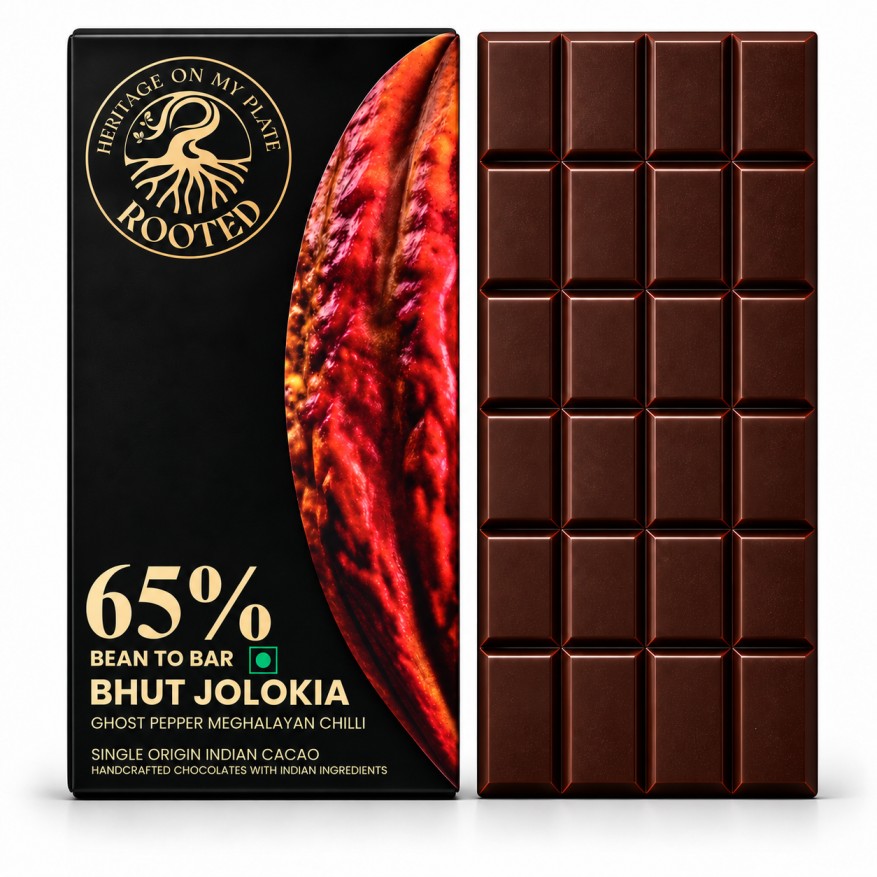
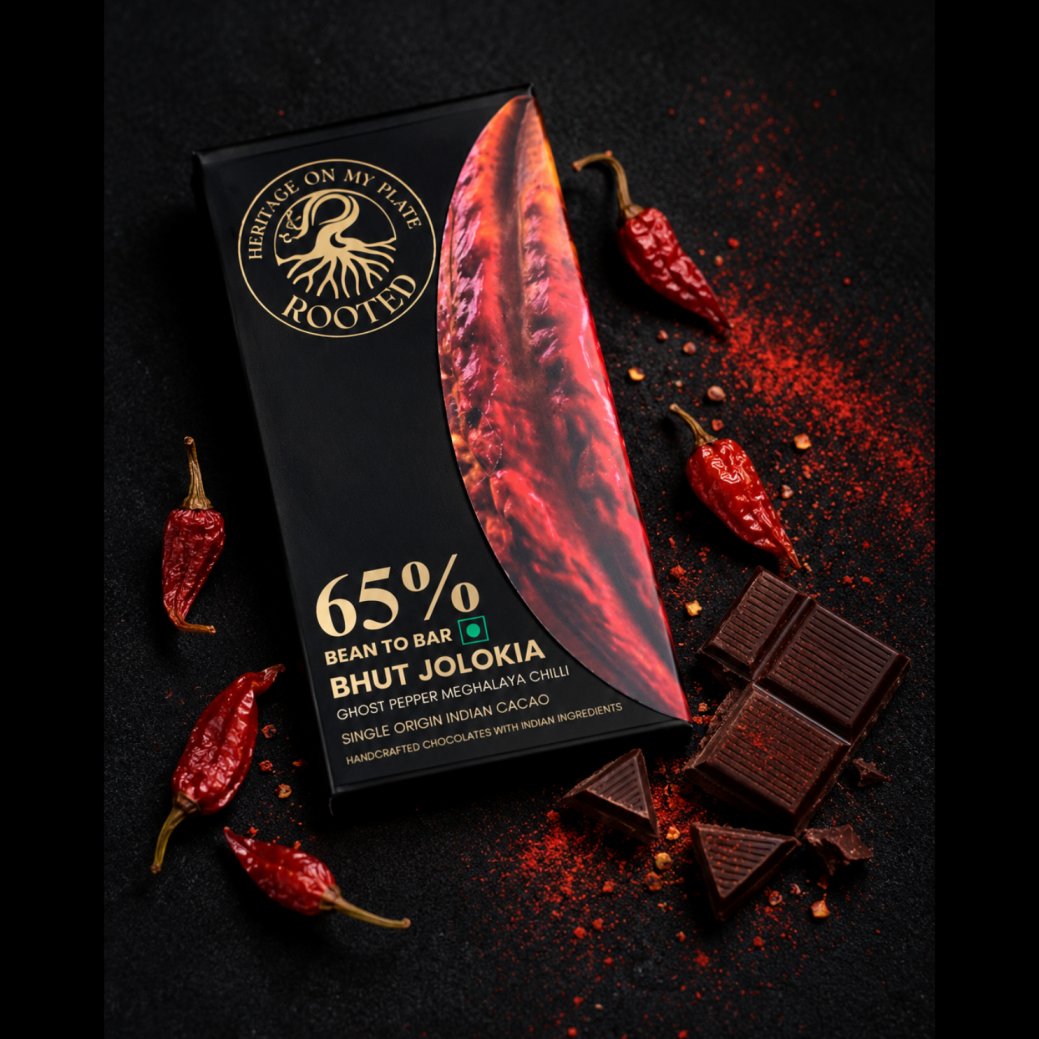
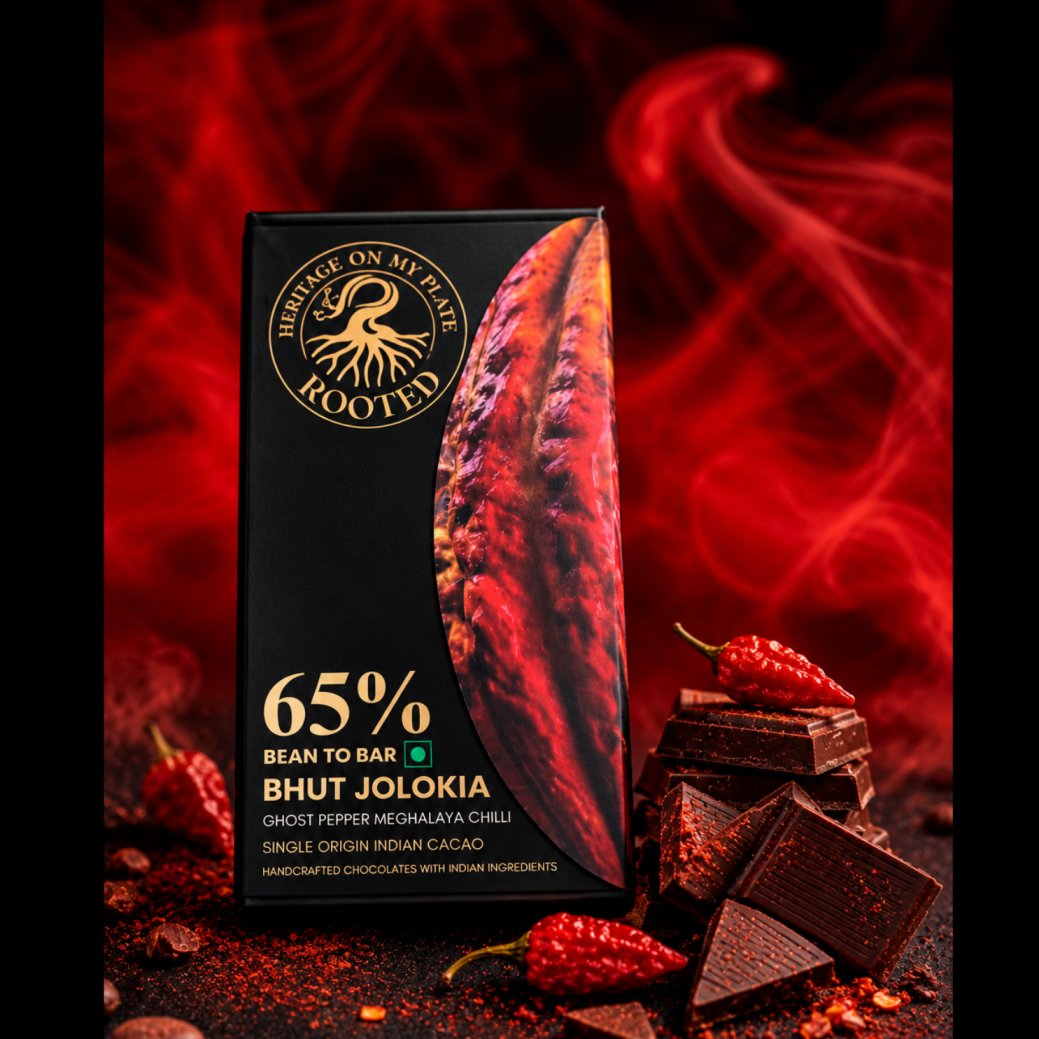
This bar connects two very different Indian food landscapes. The cacao is sourced from farms in Kerala and Karnataka, while our Bhut Jolokia comes from Meghalaya and Nagaland, where intensely hot chillies form part of a much older Northeast Indian food culture.
Season
Bhut Jolokia is preserved and eaten across seasons, but the combination of dark cacao and slowly building chilli warmth feels particularly suited to the monsoon and winter. This is a chocolate to eat gradually rather than rush.
Make
Our Indian cacao is stone-ground in small batches before being paired carefully with Bhut Jolokia. The chilli is used with restraint: cacao should arrive first, followed by fruitiness, spice and finally the distinctive lingering heat of the ghost pepper.
Tradition
Long before Bhut Jolokia became internationally famous for its heat, chillies of this type were part of cooking, chutneys and preserved foods across Northeast India. Rooted places that regional ingredient alongside South Indian cacao—not as a novelty challenge, but as a meeting between two very different Indian agricultural traditions.
Modern Use
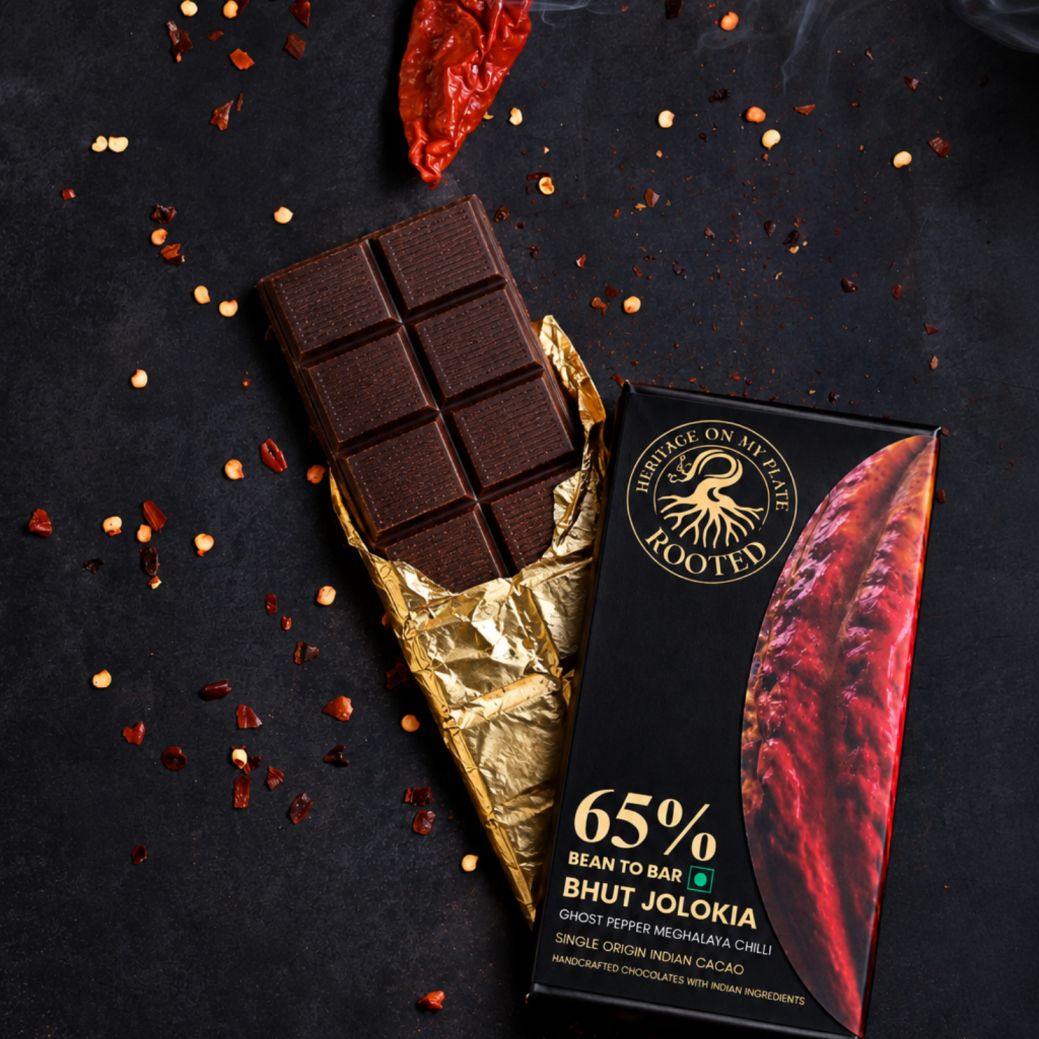
Enjoy Rooted Bhut Jolokia Chocolate one small piece at a time, especially after dinner or alongside black coffee. Bhut Jolokia contains naturally occurring capsaicinoids responsible for its heat; in this bar their role is sensory, creating a gradual warmth that contrasts with the richness of cacao.


Reviews
There are no reviews yet.